Atrix: Listed in the official MCP Registry
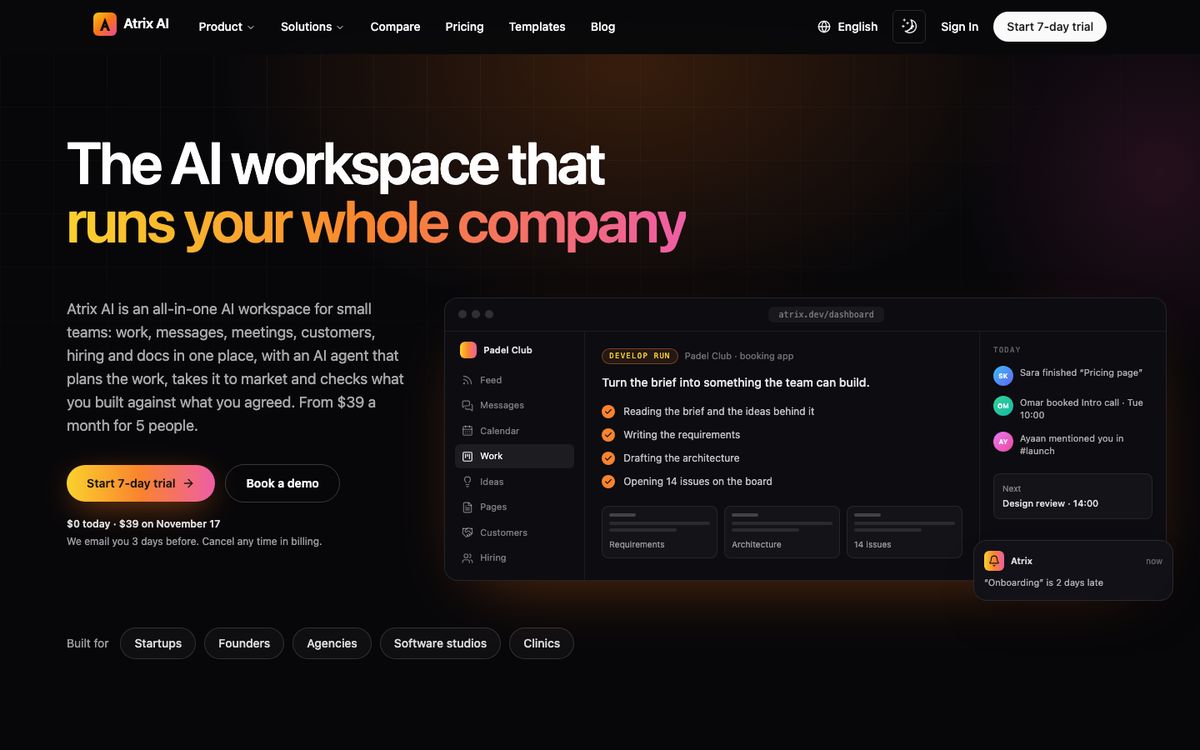
AI workspace SaaS for small teams — CRM, projects, hiring, HR and billing in one place.
The calls that shaped it
Make the AI reach the data, not the other way round
Instead of bolting a chatbot onto the app, Atrix exposes the whole workspace as a remote MCP server. Any assistant the customer already uses — Claude, Cursor, a custom agent — connects over OAuth 2.1 and gets exactly the scopes it was granted. One connection also reaches Atrix Analytics, Atrix Mail and PrimeLeadFinder.
Scopes as the security model
Forty-nine grantable scopes, write-implies-read, every token revocable, and a token can never do more than the person who created it because permissions are resolved per call. That is the same discipline I applied to banking APIs at Mashreq, transplanted to an AI integration surface.
Boring, fast foundations
Next.js App Router, Prisma on PostgreSQL, Better Auth and Stripe subscriptions. No exotic infrastructure — the novelty budget was spent on the MCP layer and the in-app agent, not on the framework.
What this proves about how I lead
Atrix is the product that shows how I think about platforms: build the integration surface first, make permissions explicit, and ship modules (CRM, HR, agreements with e-sign, calendar, pages, people) as a steady cadence rather than a big bang. As a CTO I run teams the same way — a clear API contract, scoped access, and one module landing every few weeks.
Every product under Atrix was built with the same operating model I bring to a team: a written architecture decision before the first commit, a thin vertical slice in production within the first weeks, AI-assisted delivery for the volume work, and human judgment reserved for the decisions that compound — data model, security boundary, provider choice. The hire-me page lays out how that translates into a 90-day plan for your company.
Want to talk through the architecture?
I'm happy to walk a hiring panel or a founder through any of these systems in detail — or ask my AI twin first.